


"The most painful patterns in adult relationships are almost never about the present. They are the past, playing out with a new cast."

Dr. Arpita Biswas
Ph.D., C.Psych.
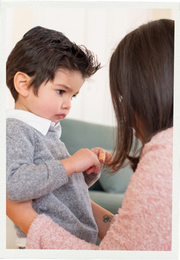



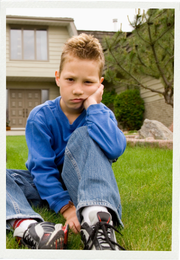




After thirty-five years of sitting across from people in pain, I have learned one thing above all else: the attachment patterns that cause the most pain in adult relationships are often not only about our present partners.
For example, I want to tell you about a woman I’ll call Meera. She came to my practice in her late thirties—accomplished, articulate, and entirely bewildered that her third significant relationship had just ended for the same reason. “I push everyone away,” she told me in our very first session. “I don’t even know I’m doing it until they’re already gone.”
Over the years, I have heard thousands of variations of this story. What neuroscience has now given us the language to understand is just how early this story is written—and how deeply it is encoded in the architecture of the brain itself.
Meera is a composite example based on themes encountered in clinical practice. Her name and identifying details have been changed to protect confidentiality.
Here is something that should astonish us more than it does: at birth, the human brain is only 25% of its adult size. During the early years, relationships work alongside genetics, nutrition, physical health, and the wider environment to shape the developing brain. Among these influences, responsive caregiving plays an especially important role in emotional regulation, stress response, and social connection.
When a caregiver responds consistently and warmly to an infant’s distress, a cascade of neurobiological events unfolds. Responsive caregiving supports the development of brain systems involved in emotional regulation, stress response, and social connection. The HPA axis — our stress-response system — learns to regulate itself. Over time, repeated experiences of comfort help the brain’s alarm system learn, “This is safe. Help comes.”
UCLA neuroscientist Allan Schore’s research shows that secure early attachment promotes right-brain development — governing emotional processing, bodily self-awareness, and the capacity to read others. The Harvard Center on the Developing Child tells us that over one million new neural connections form every second in the first three years of life. As these connections develop, responsive caregiving can help strengthen pathways associated with safety, regulation, and trust.
Mary Ainsworth’s landmark Strange Situation research identified three distinct patterns through which infants managed attachment to their caregivers: secure, avoidant, and resistant or ambivalent attachment. Researchers Mary Main and Judith Solomon later described disorganized attachment as a fourth pattern. Subsequent research has associated attachment patterns with differences in emotional regulation, physiological stress responses, and some neural processes.
Securely attached children have caregivers who are not perfect — no one is. But they are consistent enough. They respond to distress, repair ruptures, and communicate attunement through eye contact, voice, and touch. Over time, thousands of these moments teach the child’s nervous system: I can feel overwhelmed and recover. I can need someone, and they will come. As a result, many of these children grow into adults who can experience vulnerability without feeling emotionally overwhelmed by it.
Anxious attachment develops when caregiving is unpredictable — warm one day, distracted or intrusive the next. The child’s brain faces an impossible problem: I never know when help will come, so I must never stop signaling. Consequently, the amygdala may remain on high alert. Other people may describe these adults—unfairly, I think—as “too much.” In reality, their internal alarm system may never have fully learned that it could rest.
By contrast, avoidant attachment can develop when caregivers repeatedly respond to emotional expression with withdrawal, discomfort, or dismissal. The child learns to suppress attachment needs — to not cry, not reach out, to manage alone. Some psychophysiological studies suggest that avoidant adults may report relatively little distress while their bodies still show signs of stress, including changes in cortisol or skin conductance. In other words, the body may remain activated even when the person minimises or disconnects from emotional distress.
Disorganised attachment develops when the caregiver is both a source of comfort and a source of fear—through abuse, neglect, frightening behaviour, or the caregiver’s own unresolved trauma. The child faces a biological paradox: the drive to seek safety and the drive to flee are activated by the same person. Researchers have linked disorganized attachment with difficulties integrating comfort and fear, regulating emotions, and making sense of relationship experiences.
Here is what I want every person reading this to hold onto: the brain is not a fixed thing. It retains neuroplasticity — the capacity to build new pathways — throughout life. Mary Main identified a category she called “earned secure” adults: people who did not have secure childhoods but developed coherent, integrated stories about what happened to them. Research on earned security suggests that adults can develop a more coherent and secure understanding of their early experiences, even when childhood relationships were difficult or inconsistent.
Healing attachment wounds involves more than understanding where they began. Instead, therapy can help the brain and nervous system develop new experiences of safety, trust, and emotional regulation.
For example, EMDR may be helpful when attachment wounds connect to traumatic or distressing memories. It helps people recall difficult experiences while engaging in bilateral stimulation. Research suggests that this may reduce the vividness and emotional intensity of traumatic memories, although the precise mechanisms remain under investigation.
Attachment-based therapy uses the therapeutic relationship itself as a corrective emotional experience. A consistent, attuned therapist provides—often for the first time—a reliable secure base, allowing the nervous system to update its model of what relationships can be.
Attachment-related experiences of safety and threat are often felt in the body. Somatic approaches draw attention to bodily sensations, movement, breathing, and nervous-system regulation. This can help people recognize protective responses and gradually develop a greater felt sense of safety.
Intimate relationships can strongly trigger attachment wounds. However, they can also become powerful places of healing. In my practice, I see it constantly: the anxiously attached partner pursues; the avoidant withdraws; the pursuit intensifies; the withdrawal deepens. Both are trying, desperately, to feel safe. Neither is.
Developed by Sue Johnson, Emotionally Focused Therapy is one of the most extensively researched attachment-based approaches to couples therapy. It helps partners identify the attachment fears beneath recurring conflict and create new moments of emotional accessibility and responsiveness. These experiences can support a greater sense of safety, trust, and connection between partners.
Similarly, the Gottman Method strengthens friendship and helps partners turn towards each other’s bids for connection. These bids are everyday attempts to receive attention, care, and emotional responsiveness. PACT, developed by Stan Tatkin, works directly with both partners’ nervous systems, helping them notice physiological cues and interrupt escalating patterns in real time.
Ultimately, attachment patterns are not labels, personal failures, or permanent definitions of who you are. Attachment patterns are not labels, personal failures, or permanent definitions of who you are. They are protective responses that may once have helped your nervous system manage uncertainty, emotional distance, or fear.
At Scarborough Psychology Clinic, we support individuals and couples in understanding the patterns beneath recurring conflict, withdrawal, fear of closeness, emotional overwhelm, and relationship distress. Therapy can help you respond to present relationships with greater awareness, emotional safety, and choice.
Contact Scarborough Psychology Clinic to learn more about individual or couples therapy.
Ainsworth, M. D. S., Blehar, M. C., Waters, E., & Wall, S. (1978). Patterns of Attachment: A Psychological Study of the Strange Situation. Lawrence Erlbaum Associates. https://mindsplain.com/wp-content/uploads/2021/01/Ainsworth-Patterns-of-Attachment.pdf
Center on the Developing Child at Harvard University. Brain Architecture and Serve and Return Interaction Shapes Brain Circuitry. https://developingchild.harvard.edu/key-concept/brain-architecture/
Mikulincer, M., & Shaver, P. R. (2016). Attachment in Adulthood: Structure, Dynamics, and Change. Guilford Press. https://books.google.ca/books/about/Attachment_in_Adulthood_Second_Edition.html?id=GMa_CwAAQBAJ&redir_esc=y
Schore, A. N. (2000). Attachment and the regulation of the right brain. Attachment & Human Development, 2(1), 23–47. https://www.allanschore.com/pdf/SchoreAttachHumDev.pdf?
Landin-Romero, R., Moreno-Alcazar, A., Pagani, M., & Amann, B. L. (2018). How does eye movement desensitization and reprocessing therapy work? A systematic review of its mechanisms of action. Frontiers in Psychology, 9. https://pmc.ncbi.nlm.nih.gov/articles/PMC6106867/
Gottman Institute. The Research Behind the Gottman Method and research on partners’ bids for emotional connection. https://www.gottman.com/blog/want-to-improve-your-relationship-start-paying-more-attention-to-bids/