


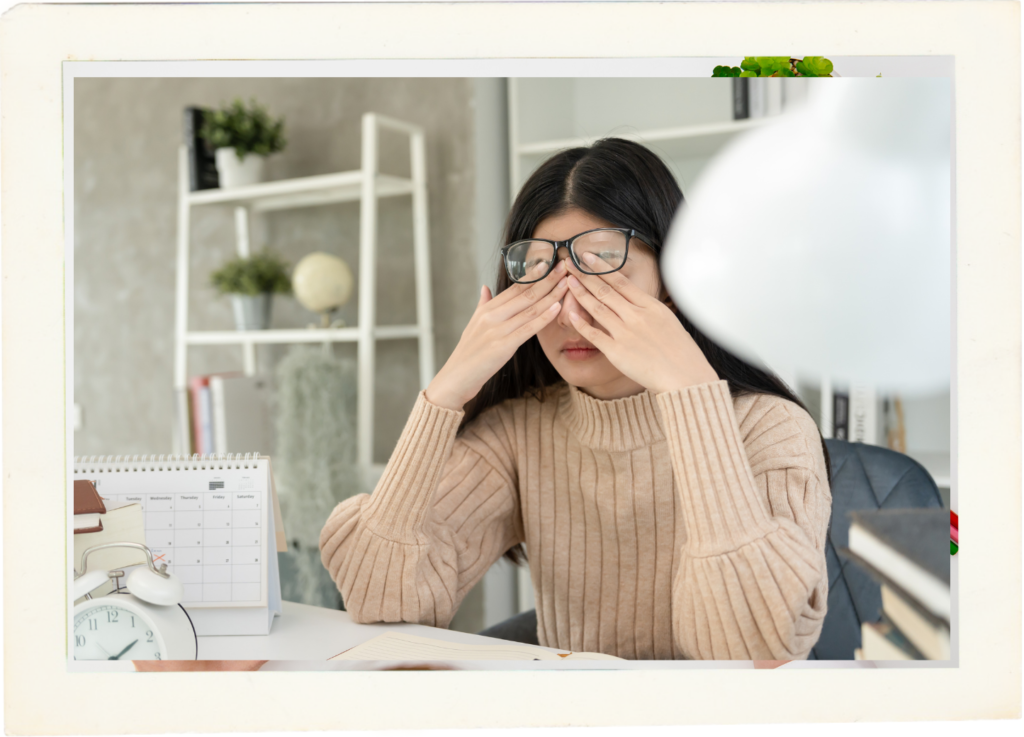

There is a particular kind of tiredness that has little to do with sleep. It comes from carrying too many thoughts, decisions, worries, notifications, and unfinished tasks at once. Even when the room is quiet, your mind may still feel crowded.
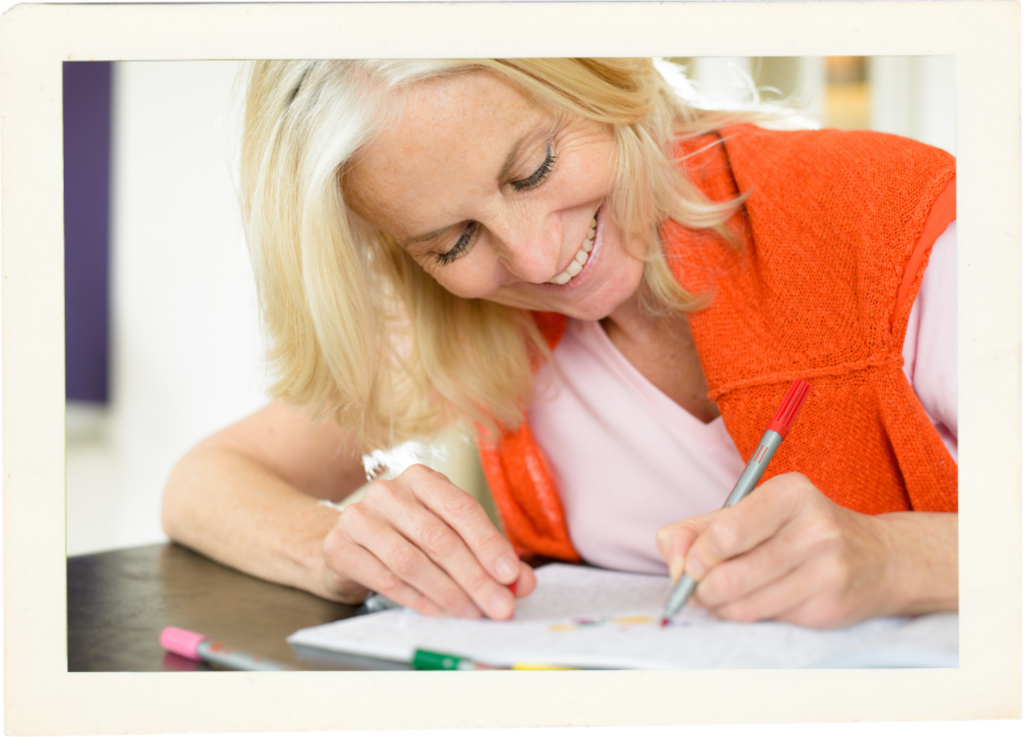
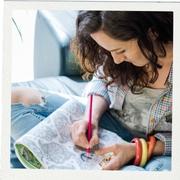
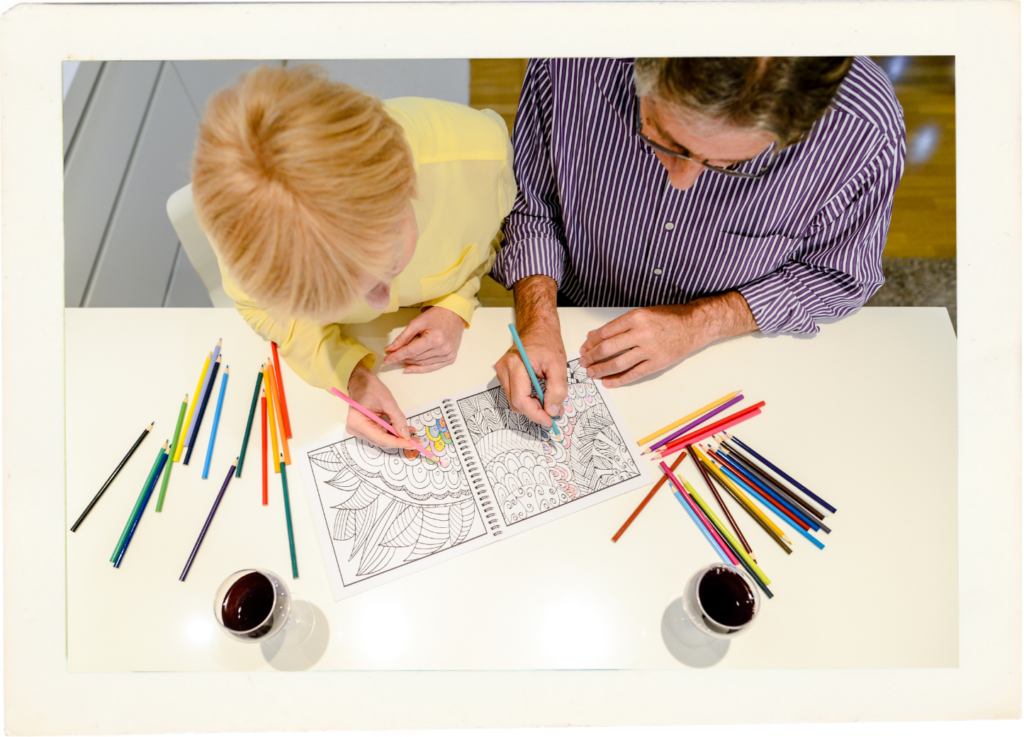
When we consider the connection between coloring and mental health, one of the most meaningful benefits may be its simplicity. Coloring offers your attention somewhere gentle to rest without asking you to clear your mind, explain your feelings, or follow a complicated relaxation routine.
You only have to choose a colour and begin.
Coloring is not a cure for anxiety, depression, trauma, or other mental health concerns. It is also not a replacement for therapy. However, research suggests that structured coloring activities may reduce short-term anxiety, support present-moment awareness, and offer a gentle form of emotional self-soothing.
An anxious or overstimulated mind often moves rapidly between past experiences, future possibilities, unfinished responsibilities, and imagined problems.
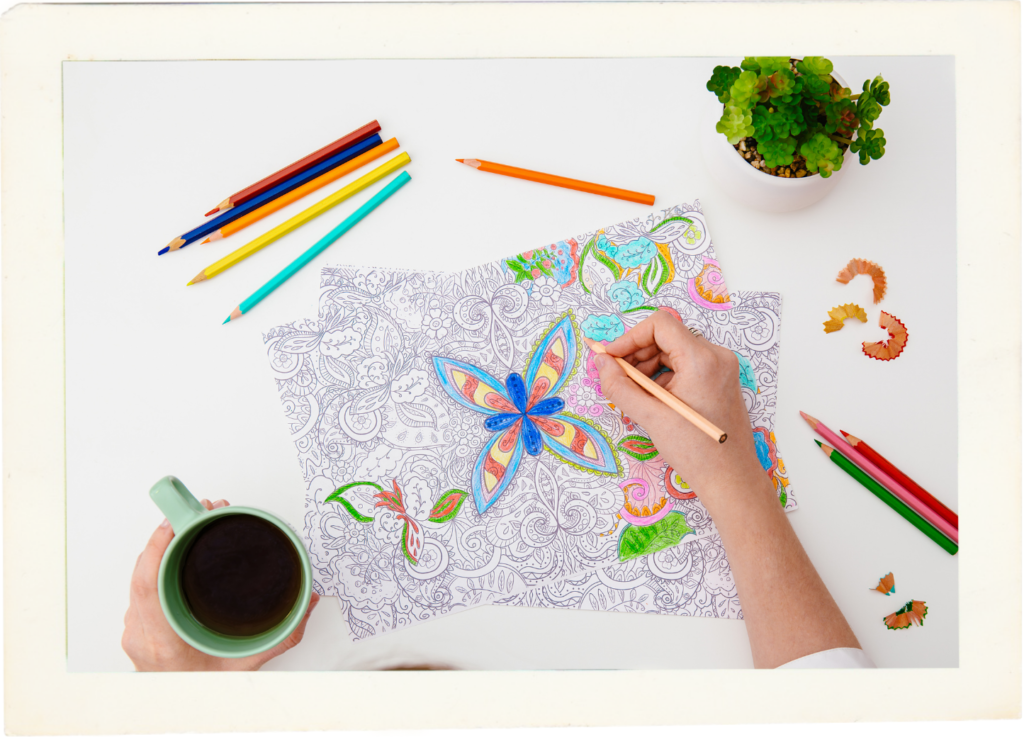
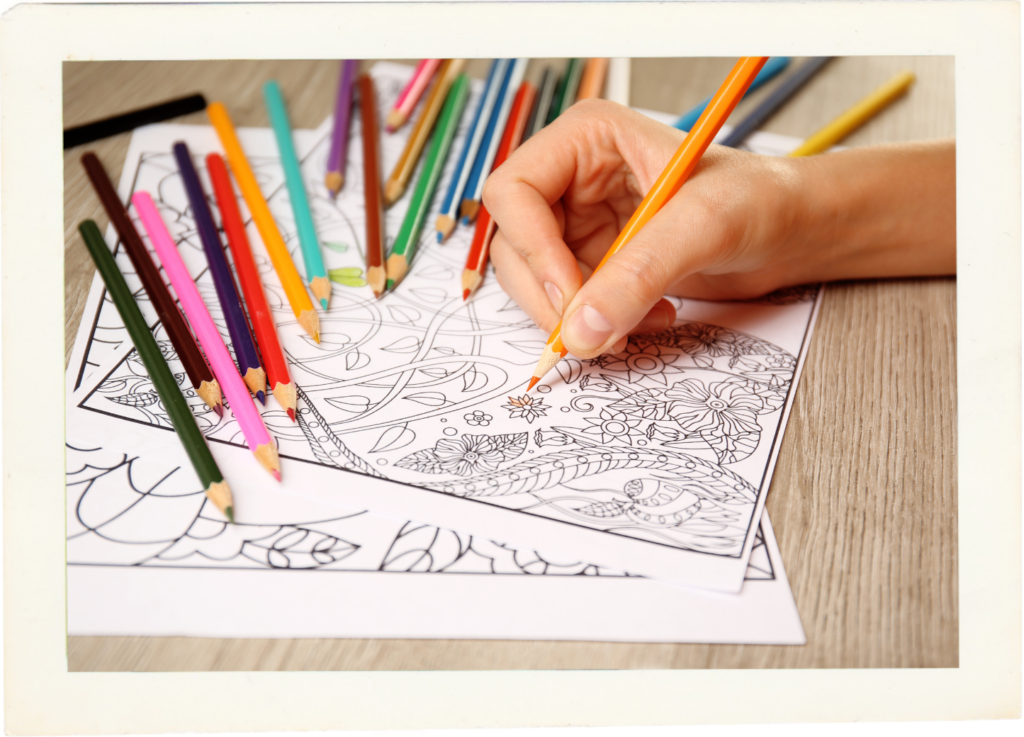
Coloring creates a small, structured task in the present. Your attention shifts toward choosing colours, noticing patterns, coordinating your hand movements, and watching the page gradually take shape.
This can be helpful because coloring gives your mind something to focus on without demanding too much from it. Unlike open-ended drawing, a coloring page already provides a structure to follow.
That structure may offer a sense of predictability and control—qualities that can feel reassuring when life feels uncertain, overwhelming, or emotionally demanding.
Coloring may also create a temporary break from repetitive thinking. Rather than trying to force anxious thoughts away, you gently redirect your attention toward the physical activity in front of you.
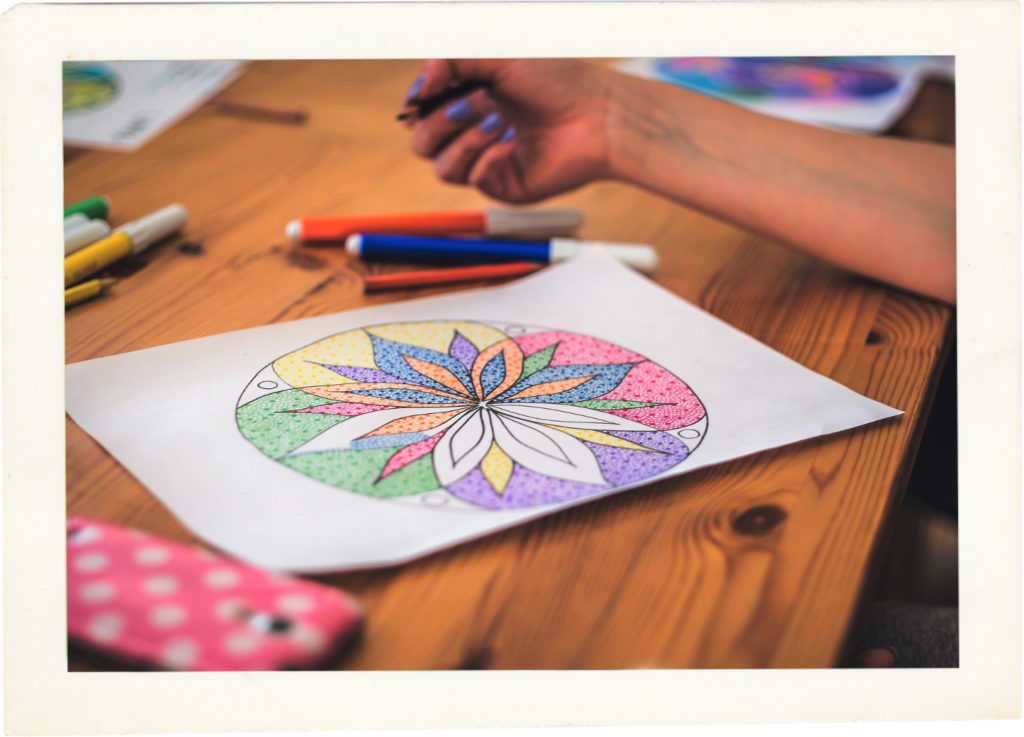
One of the earliest studies examining coloring and anxiety involved 84 university students. After researchers briefly increased the participants’ anxiety, the students were asked to color either a mandala, a plaid geometric pattern, or a blank page.
Curry and Kasser found that participants who colored the structured mandala or plaid designs experienced greater reductions in anxiety than those who were given an unstructured blank page. The researchers proposed that the complexity and organization of the geometric patterns may have helped participants focus their attention and temporarily interrupt anxious thoughts (Curry & Kasser, 2005).
These findings do not mean that mandalas have a unique or guaranteed healing effect. Rather, they suggest that structured and repetitive activities may provide short-term relief from anxious mental activity.
In another study, adults were assigned either a daily coloring activity or logic puzzles for one week.
Participants in the coloring group reported lower levels of anxiety and depressive symptoms following the intervention. The researchers described their findings as preliminary, meaning that larger studies involving more diverse groups are still needed before firm conclusions can be drawn (Flett et al., 2017).
The study did not establish coloring as a treatment for anxiety disorders or depression. It did, however, suggest that a brief and accessible creative activity may support emotional well-being for some people.
This distinction is important when discussing coloring and mental health. Coloring can be a useful coping tool, but its benefits should not be overstated.
Mindfulness does not require you to completely empty your mind. It involves noticing what is happening in the present and gently returning your attention when your thoughts wander.
Coloring may support this process through action.
Carsley and Heath studied 167 university students who completed either mindfulness-based mandala coloring, free drawing and coloring, or a non-coloring activity before taking a test.
Both coloring groups reported decreases in test anxiety and increases in present-moment mindfulness. By comparison, students in the non-coloring group experienced an increase in test anxiety (Carsley & Heath, 2020).
This suggests that the benefit may not come only from using mandalas. Slowing down, focusing on a visual task, and temporarily stepping away from a stressful situation may also be important.
Many people quietly struggle with traditional mindfulness practices. Sitting in silence can sometimes make racing thoughts feel louder rather than calmer.
This may be especially true for people experiencing intense anxiety, trauma-related symptoms, grief, emotional overload, or prolonged stress. Turning inward before you feel ready can feel uncomfortable or even exposing.
Coloring offers another possibility: mindfulness through gentle action rather than complete stillness. Instead of forcing yourself to stop thinking, you can direct your attention toward:
Your mind will still wander. The goal is not to prevent that from happening. The practice is simply to return to the page without criticizing yourself.
This is one reason coloring may feel more accessible than traditional meditation. It gives your attention a concrete and manageable anchor.
The goal is not to create something impressive. Choose a page that feels inviting rather than overly detailed, especially if perfectionism tends to make creative activities stressful.
You are allowed to color outside the lines, use unexpected colours, leave the page unfinished, or stop whenever you have had enough.
Coloring does not need to become another responsibility on your self-care checklist.
Try coloring for five or ten minutes during a stressful moment. Notice whether there is any change in your breathing, muscle tension, mental speed, or ability to concentrate.
You do not need to feel completely calm for the activity to be worthwhile. Even a small shift can be meaningful.
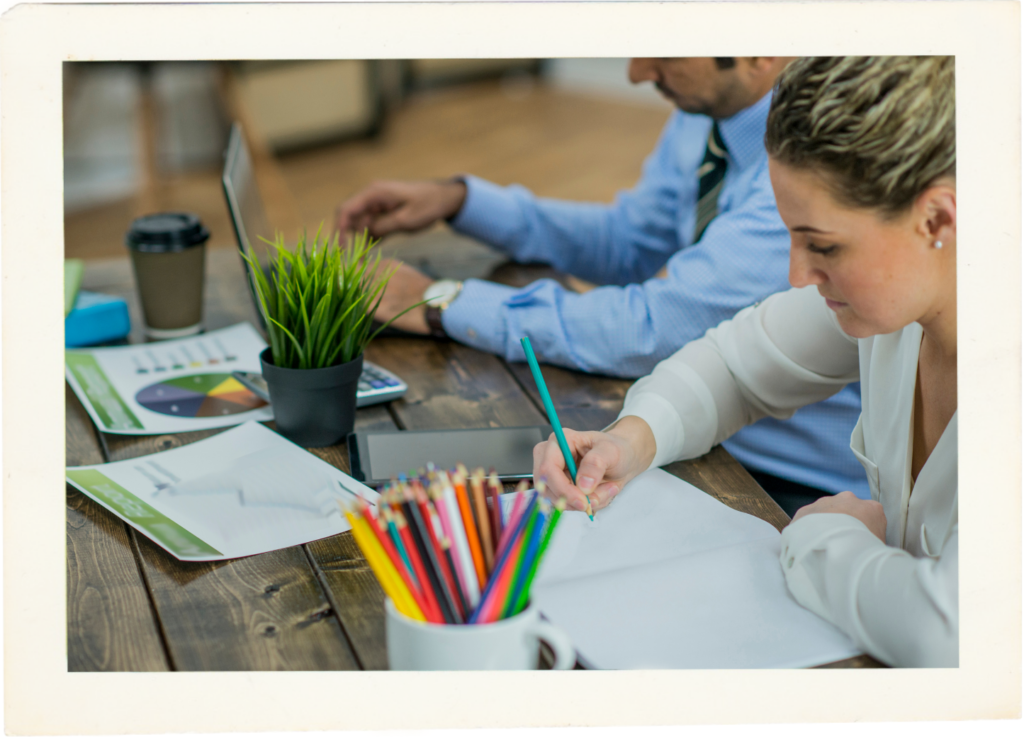
Coloring may be helpful after work, between demanding tasks, or before bedtime.
Putting your phone aside and focusing on one physical activity can offer your mind a break from notifications, scrolling, multitasking, and the constant expectation to respond.
It may also help create a clearer transition between a demanding part of your day and a period of rest.
As you color, gently notice:
When you become caught in a worry, bring your attention back to one of these sensations.
Coloring is meant to support you, not become another obligation.
Some people find detailed patterns calming. Others find them frustrating. If coloring increases your tension, choose a simpler design or try another grounding activity such as knitting, gardening, walking, listening to music, completing a puzzle, or working with clay.
Supporting your mental health is not about finding the activity that works for everyone. It is about discovering what feels manageable and meaningful for you.
There is some evidence that coloring may also be useful when combined with professional mental health treatment.
In a clinical study involving people diagnosed with Generalized Anxiety Disorder, participants who received coloring activities alongside conventional treatment showed greater improvements in anxiety, depressive symptoms, positive emotions, and negative emotions than participants who received conventional treatment alone (Samuel et al., 2022).
Although these findings are encouraging, the study does not establish coloring as a stand-alone treatment for Generalized Anxiety Disorder. It is better understood as a complementary activity that may be used alongside psychotherapy, medication, and other professional supports when appropriate.
It is also important to distinguish coloring from formal art therapy.
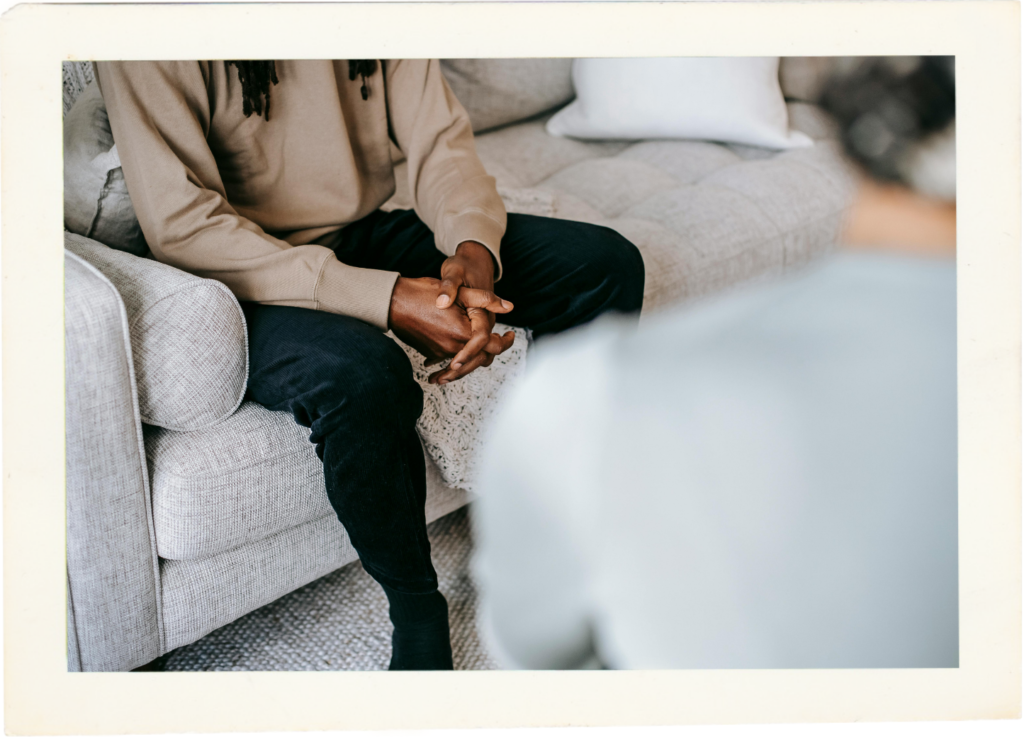
Art therapy is provided by a trained professional and may involve emotional exploration, clinical assessment, treatment planning, and therapeutic processing. Coloring independently at home can be helpful, but it is not the same as receiving art therapy.
The connection between coloring and mental health is encouraging, but a coloring page cannot resolve every source of emotional distress.
Consider reaching out for professional support when anxiety, racing thoughts, panic, sleep difficulties, irritability, avoidance, poor concentration, low mood, or emotional exhaustion begin to interfere with your relationships, work, health, or everyday life.
You do not have to wait until your distress becomes unbearable before asking for help.
At Scarborough Psychology Clinic, our psychologists and therapists provide compassionate, evidence-based support for anxiety, chronic stress, trauma, depression, emotional overwhelm, and related concerns.
Book an appointment or contact us to arrange a consultation call. Together, we can explore what you are experiencing and determine what kind of support may be most helpful for you.
Compassionate Care for a Brighter Tomorrow.
Carsley, D., & Heath, N. L. (2020). Effectiveness of mindfulness-based coloring for university students’ test anxiety. Journal of American College Health, 68(5), 518–527.
Curry, N. A., & Kasser, T. (2005). Can coloring mandalas reduce anxiety? Art Therapy, 22(2), 81–85.
Flett, J. A. M., Lie, C., Riordan, B. C., Thompson, L. M., Conner, T. S., & Hayne, H. (2017). Sharpen your pencils: Preliminary evidence that adult colouring reduces depressive symptoms and anxiety. Creativity Research Journal, 29(4), 409–416.
Kaimal, G., Ray, K., & Muniz, J. (2016). Reduction of cortisol levels and participants’ responses following art making. Art Therapy, 33(2), 74–80.
Samuel, B., Wang, H., Shi, C., Pan, Y., Yu, Y., Zhu, W., & Jing, Z. (2022). The effects of coloring therapy on patients with generalized anxiety disorder. Animal Models and Experimental Medicine, 5(6), 502-512. https://doi.org/10.1002/ame2.12256